Monday, July 25, 2011

Villas Boas has a big rebuilding job on his hands

Andre Villas Boas could hardly refuse an offer like Chelsea, but what appears to be a very attractive position could prove very challenging, even for somebody of his considerable talents.

Chelsea stagnated alarmingly last season. They started the season in blistering form, destroying anybody that crossed their path, but once they lost Frank Lampard to injury, it exposed frailties in Chelsea's squad not seen for years.

Their play became sluggish and predictable, Drogba and Anelka's goals dried up, £50million man Fernando Torres' goals never even came. The case for the defence of Chelsea was, well, their defence. They had the joint best defensive record with Manchester City last season but it still was not quite as convincing as in their Premier League winning seasons.


Chelsea's squad is an aging squad, and has been for some time. This must be the biggest concern for the new manager. Perhaps that was a reason for hiring the previous manager, Carlo Ancelotti. He does, afterall, have a proven track record with more experienced players and he has handled the big egos, but maybe now it has got to the point where the over 30s struggle to cope with the pace of the Premier League.

Looking over the current Chelsea squad there is a staggering number of player aged 30 or more. Ashley Cole, Frank Lampard, Yossi Benayoun, Didier Drogba, Florent Malouda, Paulo Ferreira, John Terry and Nicholas Anelka to name them.

This is in stark contrast to Sir Alex Ferguson's youth movement at Manchester United, which won them the Premier League and took them all the way to the Champions League final against Barcelona.

Andre Villas-Boas has enjoyed immense success for such a young manager, winning the Portuguese league, cup, supercup and the Europa League last season in his first season as Porto manager.

Roman Abramovich was sufficiently impressed to pay Porto over £13million of his fortune to acquire his second Portguese manager, now he must be similarly generous to ensure his team are not completely left behind by United and possibly Manchester City with whom they finished level on points last season.

In buying Ashley Young, Phil Jones and David De Gea, United have spent well so far this summer; buying young (pardon the pun), hungry players for the future, but who can also make a solid contribution straight away. City are actively persuing Sergio Aguero and Samir Nasri to bolster their attack and compliment their already solid defence.

So where do Chelsea start? For years Chelsea have played to the strengths of Frank Lampard and Didier Drogba, playing a slow, possession game and overpowering their opponents. Both of these players are now 33, how much longer can Chelsea play like this?

The signings of Ramires, Torres, Benayoun and Luiz suggest perhaps a change from the typical Chelsea we've seen since Jose Mourinho left. These are smaller, more mobile players and perhaps there have been long term plans to change the way Chelsea play.


Certainly, Ramires and Torres suit a faster style of play in order to exploit their pace. Chelsea's slow style of play keeps opposition teams camped in their own half, which is fine with a striker like Drogba who can bully defenders. Torres, while not physically weak, is not capable of replicating Drogba's style. To get the best out of Torres he needs to be put in behinds defences to show his pace and finishing ability, he cannot do this when defences are given the chance to retreat to a deeper line.

Nicholas Anelka had been the main outlet of pace in the Chelsea squad but his role in the team has diminished due to a lack of playing time in his true position as well as simply aging, he won't keep his pace forever.

The over 30s will soon need replacing and a new philosophy of football is necessary to get the best out of the younger players at the club. Andre Villas-Boas is a young manager with fresh ideas and isknown to favour attacking football which can only be beneficial for the likes of Josh McEachran, Ramires, Torres and the probable entrant, Luka Modric.

The real challenge for Villas-Boas is keeping Chelsea at the top while rebuilding a team that requires new blood.

Mario Balotelli - In defence of an idiot


On Sunday, an atrocity against football was committed.

Sometime in the afternoon heat of Los Angeles, a footballer dared to showboat. This deplorable act had dire, hilarious and, for some reason, very angry consequences.

    Fortunately, for those who like to watch professional sports people make tools of themselves, Mario Balotelli's chucklesome gaff was captured on television for posterity.


      As well as serving as the latest chapter in the Italian's comicbook account of his City career, this bungled piece of buffoonery was the trigger for all kinds of scorn to be poured upon the striker.

        Since joining Manchester City, Mario Balotelli has had a, erm, mixed time of things. In his 12 months in the North-West, he has thrown darts at a youth teamer (for a laugh), single-handedly stopped a child from being bullied, wrestled with a plastic bib and given away thousands of pounds to a tramp.

      Compared to those escapades, fluffing a back-hell is probably the least controversial thing he's done. Well, you'd think so. Apparently not.

      Moments after the miss, Roberto Mancini substituted the striker and the two shared a heated exchange of words. The anger didn't stay between these two, either, Twitter was soon abuzz with words like 'disrespectful', 'unprofessional' and 'disgrace'.

      'Idiot' would have sufficed.

      Had he scored, or maybe even if it wasn't one of football's biggest nut-jobs, there's probable doubt that these words would have been reeled off. Certainly, had it gone in, the superlatives may well have been in free-flow.

      Instead, though, he missed, looked a fool, everybody laughed and the clip will be on something like 'Danny Dyer's Pwoppa Nawtie Footie Fowl Aaps' and that's how it should have stayed.

      The fuss would've been understandable had it been in a competitive game, like Robbie Keane's abomination of a fancy flick ( go to 3.20), in the Champions League, Djimi Traore's effort of a Zidane drag-back or David Dunn's derby day hilarities.

      Instead, it was in a friendly. A friendly. You know, those unimportant games which are usually devoid of entertainment? Well Balotelli tried a trick to entertain. Yes, he messed it up, but it was entertaining.

      If outlandish attempts at pointless tricks are that bad and are a blight on the game, maybe we should start a campaign, Father Ted style?

      DOWN WITH THIS SORT OF THING! And this. And this. And especially this.

      Imagine football without this type of disrespectful play. A joyous game full of Kevin Davieses, Dirk Kuyts, Darren Fletchers and Gareth Barrys.

      Dedicated. Committed. Functional. Boring.

      Saturday, July 16, 2011

      Strip-tease

      The close season is a dull time for a football fan. Saturdays drift by aimlessly, and it's only around now, with the minor consolation of pre-season friendlies getting underway, that there's any relief from an otherwise dreadful summer of drizzle, golf and the Women's World Cup.

      The only thing that's kept me going is the steady stream of new kits being revealed, something I've kept on top of thanks to Football-Shirts.co.uk. Now, the issue of new home, away, 3rd, and sometimes even 4th (not to mention European home and away) kits being replaced every season is a rant in itself, and one I won't get into for now.

      Because I wanted to focus on the kits themselves. If you sift through the standard, bland and oft-recycled Nike and Adidas templates, and try to kid yourself that Umbro's featureless 'Tailored' range isn't just them running out of ideas rather than the PR excuse of wanting to celebrate [insert team name here]'s proud heritage, there's actually some cracking designs knocking around.


      Wycombe's offering, in particular, is a belter, as Kappa show that you can actually do something interesting with a fairly restricting template of two-tone blue quarters, with their wobbly (and, let's be honest, comedy breasts lookalike) chest panels giving the shirt an nice little feature. That said, it does suffer from the age-old Kappa issues of a sponsor that's far too high, and those damn shoulder logos.

      But where's the fun in looking at nice shirts? Like a club just before closing time, there's some absolute munters hanging around trying desperately to grab somebody's attention. And what better place to start than at the top of club football?


      Grim. I've seen someone wearing this shirt around town (Preston must have a fledgling Catalan population) and it looks just as bad in real life. I can appreciate that Nike want to do something interesting and different with one of its biggest clients, but this? Really? When have asymmetrical stripes EVER looked good? In fact, I'm reminded of this:


      Still, it could be worse. You could be a Gillingham fan, stuck with wearing this. At least it's only a third shirt, so hopefully for Gills' sake they won't have to look at it too often. And just in case you were wondering, the shorts are pink, too.

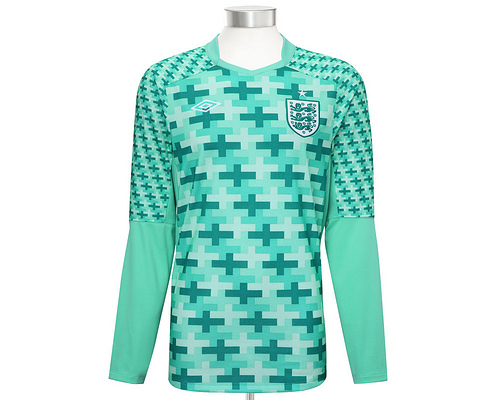
      But before I go, spare a thought for goalkeepers. You'd think they'd be fairly safe from the atrocities afflicting their outfield team-mates, after all, shouldn't they just be stuck in a plain green shirt and left to it? Not if you're the England goalkeeper!


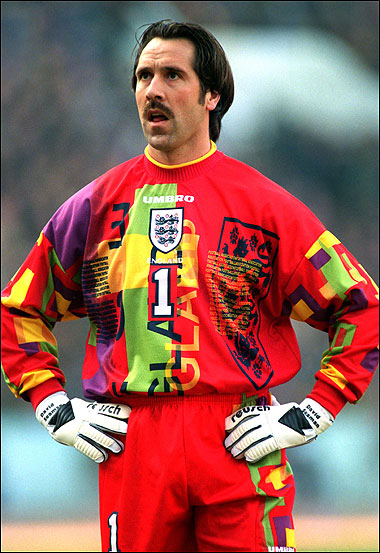
      This is, quite possibly, the worst kit of any sort I've seen since, well, England's away goalkeeper kit from Euro 96. What, you don't remember? Well let me refresh your memory...


      It looks like a parrot was sick on a rainbow. I remember laughing about this kit when I was 8 in the playground. It was even worse when it was what Seaman was wearing in that heart-wrenching shooting against the Germans. And now that memory has made me cry, I think it's an appropriate time to go.

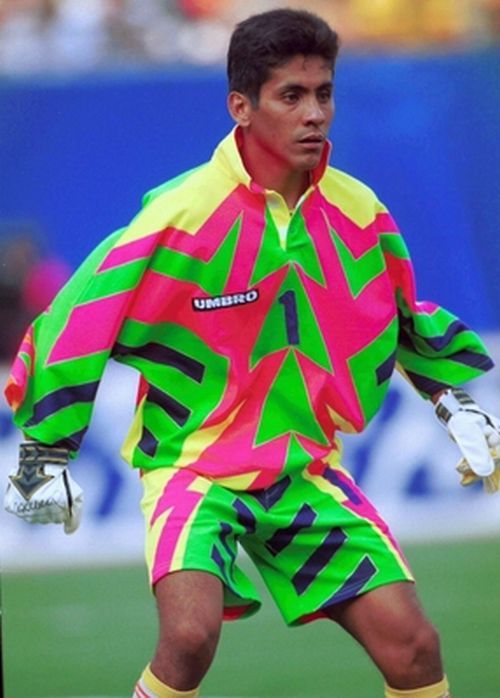
      But hang on. How can I possibly write a blog about bad football shirts, and even go so far as to mention goalkeepers, without this fella getting in on the action. Jorge Campos, we at Half Time Oranges salute you!

      Monday, June 6, 2011

      A HtO guide to: Being a transfer news guru

      We all know summer is traditionally transfer silly season. It seems tradition that papers spread and, on occasions, dream up the latest, almost instantly tedious, transfer saga. But these shenanigans are no-longer restricted to the news room and journalists.

      You just have to open up Twitter to see plethora of possibly, genuinely, deluded bores churning out a deluge of transfer 'news' at a rate of knots.

      It's so easy, anyone can play!

      Yes! You, too, can make up a vast platter of transfer bollocks news to serve up. It's easy.

      Here's Half Time Oranges' handy 10 step guide to being a Transfer Watcher And Teller:

      1. Pick a club, any club.
      2. Pick a player said club has been linked with at any time over the past 18 months or a young 'unknown' who turns out to be amazing in the latest Football Manager game.
      3. Pick a number, normally between seven and 30.
      4. Add a '£' before the number and a 'm' after it.
      5. Say a 'source' has told you that the club has bid said amount for said player (remember, you can't name sources - which is just as well, considering yours is about as real as Lolo Ferrari's ghost's tits).
      6. Say you're pretty sure it's going to happen but can't confirm it until the club do (you know, because you don't want to get sued or anything).
      7. Avoid awkward questions by saying your gran's dead and that you have to go offline for a bit.
      8. Questions persisting? 'Kill off' your parents/siblings/pets. Hey, that's what they're there for!
      9. Dispatch of as many family members as necessary until no one dares question your credibility for fear of upsetting a soul so brave that, despite their entire family being wiped from the earth inside a week, can still soldier on bravely to report that they reckon Kaka will be at Chelsea next season.
      10. Transfer happen? Yes? Brag smugly to your doubters. No? Say it fell through at the last minute. Ideally by a last minute price-hike.
      And there you have it. Blag, entertain and annoy like a true pro.


      Pre-season - the unavoidable no-man's land

      The football season has ended and, with no World Cup or European Championship, a football-free summer is ahead. A full summer without football. For some, non-fans, this is pure bliss. For others, it is a short-cut to insanity.

      At first it seems a nice, relaxing little break. The play-offs wean you off the spherical goodness nice and slowly, then the next couple of weekends are quite pleasant. There's no biting of nails; no constantly refreshing web pages or Twitter feeds. There's no pacing up and down your front room, wearing a hole in your carpet. In short, there's no worrying. It's nice.

      But then you worry that you're not worrying. Why aren't we worrying? It feels strange, almost alien, not to be wrenching your gut nearly every afternoon or evening over some game of football or other. Your brain, so used to working out, updating and hypothesising over ever-changing implications and permutations of results and formations, starts to feel under-used.

      Yes, there's  the Under-21 European Championship, to stop us all from going totally cold turkey before the pre-season friendlies kick in, but it isn't the same.

      Saturdays become desolate places without the company of Jeff and company or, at the worst, Gabby Logan and Garth Crooks (well, maybe being without Crooks is preferable, but you get the point).


      While we mark off the days to the first friendly, we do our best to tide ourselves over. There's FIFA, Pro Evolution and Football Manager to give us our fix. Hell, some of us even go out and play football. Actually play it. With a proper ball. On grass and everything.

      However, until 3pm on a Saturday in August and our over-optimism sets us up for a gauntlet of worry and the inevitable yet crushing disappointment, we will be longing for the real thing. The proper football. The best distraction from the reality that there is other stuff - actually properly important and often frightening stuff - happening in the world.

      Put simply, a world without football is boring and scary. Roll on August.

      Thursday, April 28, 2011

      Mourinho's tactics just not cricket... but were they football?

      Last night's instalment of this season's 'El Clasico' series proved two things: 1) Lionel Messi is some sort of footballing demi-god and 2) Jose Mourinho really doesn't like to lose.

      Given that most of us already knew these two things, the only other thing the first leg of this Champions League semi-final presented us with was as clear an example of 'football v anti-football' as you could wish to see (assuming you are masochistic enough to wish for such a thing).


      Yes, Messi's beautiful goal aside, last night's game will be remembered, chiefly, for the dearth of sportsmanship, the wealth of play-acting, tantrums, José Mourinho's conspiracy theories and Real's intent on stifling Barca's creativity.

      Putting aside the gamesmanship and blatant cheating from both sides, Real's actual footballing tactics were attacked for spoiling the game.

      To those watching for entertainment, they most certainly did, but when you are a manager (one who isn't Arsene Wenger, anyway), aesthetics are second to results. Especially if that result leads to a European Cup final.

      Barcelona are held up as the epitome of 'the beautiful game'. Their adventurous, quick, fluid and often devastating style of play is the envy of most sides in the world and stopping them proves to be nigh on impossible.

      One way to hope to do it is by packing the middle of the park and trying to restrict the time the likes of Xavi and Iniesta have on the ball whilst also trying to contain the likes of Messi and Villa.

      This usually results in a 'parking the bus' approach and derision from those who believe that this isn't playing football - labeling it as 'anti-football'. But is it?

      As HtO's very own Phil McLaggan alluded to in an earlier blog, Mourinho's selection of three defensive midfielders in the previous two encounters with the Catalans came under heavy scrutiny. This, however, was largely justified with one draw and a victory (albeit in extra-time).

      Last night was no different, with midfield sitters Pepe, Lassana Diarra and Xabi Alonso all deployed together. Predictably, Los Blancos looked to stop Barcelona by any means possible with Pepe and Sergio Ramos looking to impose themselves on Barcelona's creative hub of Xavi and Messi, respectively.

      Mourinho's men were obviously briefed beforehand to do everything they could to disrupt Barca's flow. This made for an ugly, disjointed, game but, crucially, a game where Real were managing to prevent Barcelona from opening them up. That was until Pepe's dubious red card gave Barcelona the bit of extra space and time they needed to pick through the Madrid back-line.

      For a man whose job security relies on results (possibly more-so in the CL for Madrid than any other competition, especially against their bitter rivals), the point of competitive football is to beat the opposition, not to appease the neutral's desire for entertainment.


      So why, in such a big game, would Mourinho choose to play an open, attacking game - and risk another 5-0 mauling - when he knows another set of tactics would see him best placed to snatch a win? Put simply: he wouldn't.

      There are many ways to win a game; be it Helenio Herrera's Catenaccio system, Johan Cruyff's 'Total Football' ideology or Kevin Keegan's kamikaze style but, at the end of the day - attractive or ugly; attacking or defensive - it's all football.

      So what about The Special One's latest effort? Well, to paraphrase a Star Trek character: 'It's football, Jim, but not as we like it'.

      Sunday, April 24, 2011

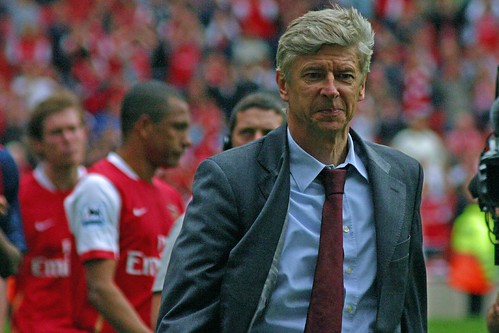
      Wenger - Should he stay or should he go?

      Perhaps Arsene Wenger is mulling over Joe Strummer's classic question. Maybe the answer is "If I stay there will be trouble, if I go there will be double". Let's be honest, Arsenal fans would kill for a double after a trophy drought of six years.

      Who would have thought, after Patrick Vieira stroked home the winning penalty against Manchester United in 2005's FA Cup Final, that just weeks later he'd be gone but also in six years time it would still be the last kick to win the club a trophy?

      Cesc Fabregas, who would ultimately replace Vieira as the club captain, apparently (he claims it's a mistranslation) claimed that if Arsene Wenger was a manager in Spain he would have been dismissed by now after such a dry spell.

      Given the success Wenger had in his first 10 years in North London, for it to stop so suddenly is quite alarming, for it to continue like that is even more alarming. It's difficult to argue with Fabregas' logic, assuming he did say it. Look at the way Barcelona let Frank Rijkaard go after a couple of poor seasons and Real Madrid sack managers like it's going out of fashion.

      Even in England, you could probably say the same. Wenger is the second longest serving manager in the Premier League, behind Sir Alex Ferguson. There is a culture of reckless sackings in the Premier League, which even Jose Mourinho fell foul of.

      In Wenger's defence, much has changed for the better at Arsenal since the Frenchman arrived. They play some of the most attractive football around, they play in a huge new stadium, he's won plenty of trophies, there was the "invincibles" season and the policy of youth development.

      The Invincibles who went for a whole Premier League season without losing should be the first thing everybody remembers about Wenger's Arsenal legacy, but he is now in danger of being remembered as being a manager who turned Arsenal from a winning team into a team that develops good players but doesn't win anything.


      And herein lies the problem, it has been suggested that Arsene Wenger wants to create an Arsenal youth policy much like Barcelona. Johann Cruyff had the vision to change the philosophy of football at Barcelona. His period as manager was greatly successful and his legacy has lived on as one of his former players, Pep Guardiola has adopted that same "Tiki Taka" style.

      Cruyff signed several big name players for Barcelona in his time there, the likes of Hristo Stoichkov, Romario, Gheoghe Hagi and Michael Laudrup. They benefited the sytem, and when he has needed to, Guardiola has also spent big on his team to compliment it. Buying players like David Villa, Zlatan Ibrahimovic and Dmytro Chygrynskiy.

      Cruyff laid the foundations at Barcelona for Guardiola to build something truly special and Wenger will surely have been inspired by this. Wenger's youth policy has been going on for some years now. The Invincibles squad was built on a mixture of experience (Bergkamp, Pires), smart signings (Campbell, Toure, Ljungberg) and youth (Fabregas, Clichy, Senderos). It was an ideal set of elements that made a formidable compound.

      Many changes have been made since then, and it has been a downhill slide for the Gunners. The current side lacks experience, and with Wenger's keenness to blood these young players and build them into a great team, a reluctance to tamper with it has appeared.

      Weaknesses in the team have also appeared, and because of Wenger's aversion to change these weaknesses are there for all to see. A staggering 54% of Arsenal's goals conceded this season have come from set pieces. It's evident that opponents are capitalising on this. Arsenal do not have a truly dominant central defender in the mould of a Tony Adams or Sol Campbell. Djourou and Koscielny are fine players with the ball at their feet but they struggle with the physical side of the game.

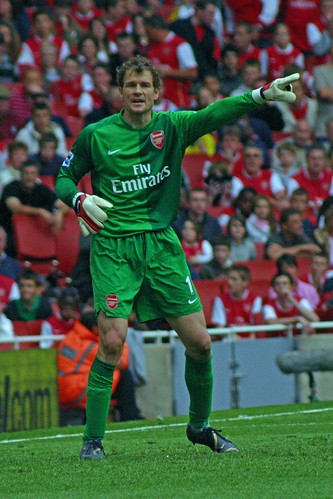
      Myriad goalkeeping errors have been a problem ever since David Seaman left the club. A string of goalkeepers have attempted to plug the gap left by the (formerly) ponytailed Yorkshireman. The eccentric German, Jens Lehmann probably did the best job of it, but he could hardly be labelled reliable. Neither could Manuel Almunia, Lukasz Fabianski or Wojciech Szczesny.

      This stubbornness against addressing Arsenal's problems is hurting the team. Wenger seems to refuse to admit he is ever wrong, and until he changes that stance then Arsenal will still struggle. The issue now has become does the manager change his ways or do Arsenal change their manager?

      Wenger's vision for the future of Arsenal is great, in theory, and to an extent it is working. He said himself:
      We will continue to have an absolute commitment to youth. We will add to that what is needed. I believe you cannot be responsible, be a big club and have no desire to develop young players.
      I feel there is always a need to improve the team but if you look at our season you cannot come to the conclusion we need a massive change.
      In investing so much time in the future, Wenger seems to have forgotten about the present. It's all well and good building a better Arsenal for the future, but for a successful future Arsenal, there needs to be a successful current Arsenal. Until that happens, Wenger faces tarnishing his legacy.